Introduction
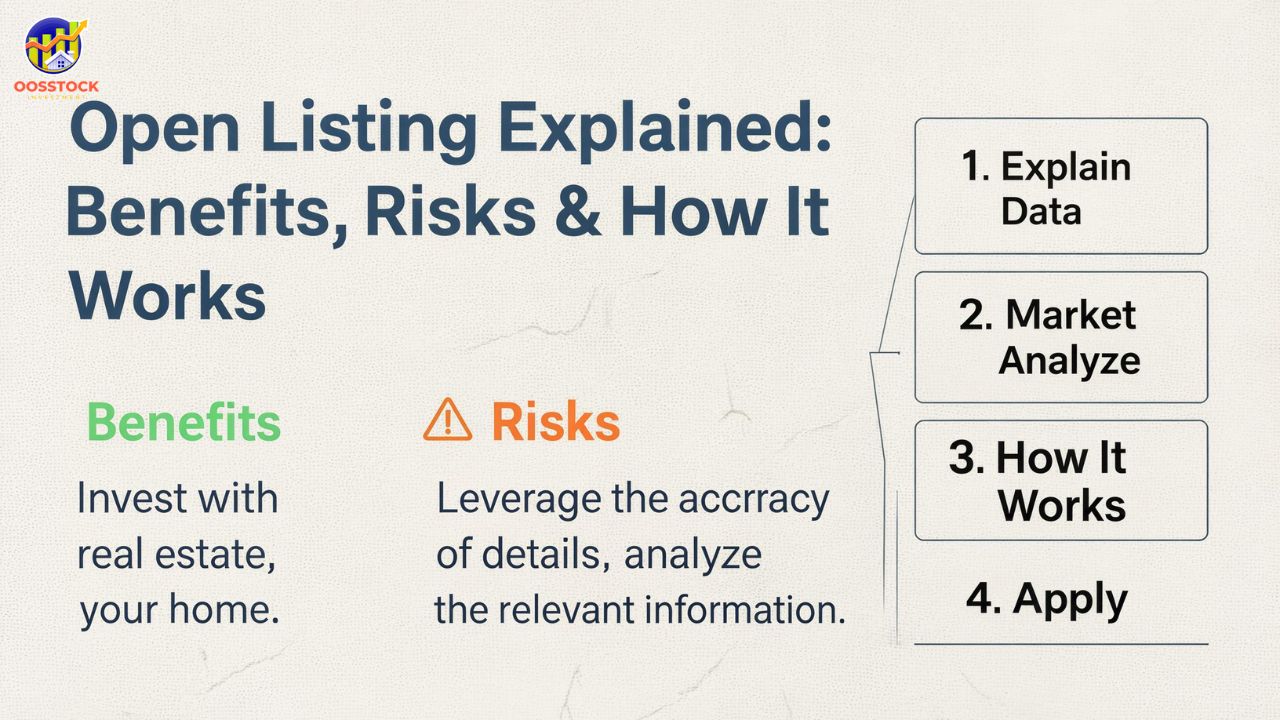
Selling a property can feel overwhelming, especially when you’re trying to choose the best strategy to attract buyers. One option many homeowners consider is an open listing, a flexible arrangement that allows multiple real estate agents to market the same property simultaneously.
Unlike exclusive listing agreements that lock you into working with a single agent, an open listing provides freedom and flexibility. Sellers can work with several agents—or even find buyers themselves—without being tied to one brokerage.
That freedom can be powerful, but it also comes with trade-offs. Some sellers love the competitive nature of this approach, while others discover it creates confusion and limited marketing effort. Understanding how it works helps you decide whether it fits your selling goals.
What Is an Open Listing in Real Estate
An open listing is a type of real estate agreement in which a property owner can hire multiple real estate agents to find a buyer for their property. The key rule is simple: the agent who successfully brings the buyer earns the commission.
If the homeowner personally finds a buyer, they do not owe commission to any agent.
This arrangement contrasts with exclusive agreements where only one agent has the right to sell the property.
In an open listing structure:
- Multiple agents may advertise the same property
- Only the successful agent gets paid
- The seller can sell independently without paying commission
- Agents have no guaranteed payment
Because of this structure, the system often creates a competitive environment among agents.
Key Characteristics of Open Listings
Several defining characteristics make this type of listing unique.
Non-exclusive agreement
The seller is free to work with multiple agents simultaneously.
Commission only upon success
Only the agent who secures the buyer earns payment.
Seller participation allowed
Homeowners can market and sell the property themselves.
Flexible duration
Most agreements have short or informal timelines compared to exclusive listings.
How Open Listing Agreements Work
Understanding the process behind an open listing helps clarify why some sellers prefer this strategy.
Step-by-step process
- The homeowner signs agreements with one or more real estate agents.
- Each agent independently markets the property.
- Agents try to bring interested buyers.
- The first agent who closes a deal receives the commission.
Meanwhile, the property owner may:
- Advertise independently
- Use social media
- Post listings on real estate platforms
- Show the home to potential buyers
If the seller personally closes a deal, no commission is owed.
Example scenario
Imagine Sarah wants to sell her house.
Instead of hiring one agent exclusively, she signs an open listing agreement with three agents.
Each agent starts marketing the property:
- Agent A posts online ads.
- Agent B contacts buyers in their database.
- Agent C arranges showings.
Eventually, Agent B introduces a buyer who purchases the home. Agent B receives the commission, while the others receive nothing.
Key Features of Open Listing Contracts
While open listings vary, most agreements share several key elements.
| Feature | Explanation |
|---|---|
| Non-exclusive rights | Multiple agents can represent the property |
| Commission structure | Paid only to the successful agent |
| Seller flexibility | Seller may find buyers independently |
| Short agreement periods | Often shorter than exclusive contracts |
| Lower agent commitment | Agents may invest less marketing effort |
These features make open listings both appealing and risky.
Advantages of Open Listing for Sellers
For certain homeowners, the open listing strategy can offer meaningful advantages.
1. Maximum flexibility
Sellers maintain full control over their property sale.
They can:
- Switch agents easily
- Market the property themselves
- Avoid long contracts
This flexibility appeals to experienced property owners.
2. No commission if you find the buyer
One of the biggest benefits is the potential to save thousands of dollars in commission.
For example:
- A $400,000 property
- Typical 5% commission = $20,000
If the seller finds the buyer independently, that money stays in their pocket.
3. Multiple agents working simultaneously
Having several agents marketing a property can increase exposure.
Each agent may:
- Contact different buyers
- Use different marketing strategies
- Reach different networks
In theory, this expands the buyer pool.
Disadvantages and Risks of Open Listings
Despite the flexibility, open listings also come with significant downsides.
1. Reduced agent motivation
Since agents are not guaranteed payment, they may prioritize properties under exclusive agreements.
Marketing efforts may be minimal.
Agents might avoid spending money on:
- Professional photography
- Advertising campaigns
- Staging services
2. Market confusion
When multiple agents advertise the same property, problems can arise.
Buyers may see:
- Different prices
- Different property descriptions
- Conflicting contact information
This can create distrust or confusion.
3. Limited MLS exposure
In many markets, open listings are not prioritized on the MLS (Multiple Listing Service).
Agents may hesitate to place these listings on MLS because of commission uncertainty.
Open Listing vs Exclusive Listing
Many sellers struggle to choose between listing types. The differences are significant.
| Feature | Open Listing | Exclusive Listing |
|---|---|---|
| Number of agents | Multiple | One |
| Commission | Paid only if agent sells | Paid to listing agent |
| Agent motivation | Often lower | Usually higher |
| Marketing investment | Limited | Significant |
| Seller flexibility | High | Lower |
Most professional real estate agents prefer exclusive listings because they guarantee compensation for their work.
When Should You Use an Open Listing
An open listing works best in specific situations.
Experienced sellers
Homeowners familiar with real estate transactions may feel comfortable managing their own marketing.
Hot real estate markets
In high-demand markets where homes sell quickly, the competition between agents may help generate fast offers.
Investment properties
Some property investors prefer open listings because they already have buyer networks.
Sellers with strong networks
If a seller has strong personal connections—friends, investors, or local buyers—an open listing can reduce reliance on agents.
Real-Life Examples of Open Listing Situations
Real estate professionals encounter open listings in several real-world scenarios.
Luxury property sales
Sometimes luxury homes are marketed through multiple agents to maximize exposure among wealthy buyers.
Off-market properties
Certain sellers prefer private transactions rather than public listings.
In these cases, agents discreetly market the property to select buyers.
Commercial real estate
Commercial properties sometimes use open listing agreements because investor networks vary widely among brokers.
Tips for Sellers Using Open Listings
If you decide to try an open listing strategy, following best practices can increase your chances of success.
Maintain consistent pricing
Ensure every agent markets the property at the same price.
Price inconsistency creates buyer skepticism.
Provide clear property details
Give each agent identical information:
- square footage
- renovation history
- neighborhood benefits
- property disclosures
Consistency prevents confusion.
Track agent activity
Keep records of which agents are showing the property.
This avoids disputes over who introduced the buyer.
Consider professional marketing
Even with an open listing, investing in quality marketing helps attract buyers.
Consider:
- Professional photos
- Virtual tours
- Property videos
High-quality visuals increase buyer interest dramatically.
Market Trends and Statistics
While open listings exist worldwide, they are relatively uncommon compared to exclusive agreements.
According to industry reports:
- Over 90% of residential properties are sold through exclusive listing contracts.
- Only a small percentage of sellers choose open listing strategies.
- Properties marketed exclusively often receive more coordinated marketing efforts.
This trend highlights the importance of agent commitment in successful home sales.
FAQ
What is an open listing in real estate?
An open listing is a non-exclusive agreement where multiple real estate agents can market a property. The agent who finds the buyer earns the commission.
Do sellers pay commission in an open listing?
Sellers only pay commission if an agent successfully brings a buyer. If the seller finds the buyer independently, no commission is owed.
Why do agents avoid open listings?
Many agents prefer exclusive agreements because open listings do not guarantee compensation for their work.
Are open listings legal everywhere?
Yes, open listings are legal in most real estate markets, although local regulations and brokerage policies may vary.
Is an open listing good for selling a home?
It can work in hot markets or for experienced sellers, but many homeowners achieve better results with exclusive listing agreements.
Can a homeowner work with multiple agents?
Yes. That is the defining feature of an open listing—multiple agents can attempt to sell the property simultaneously.
Do open listings appear on MLS?
Sometimes, but many agents hesitate to place them on MLS due to commission uncertainty.
What is the biggest risk of open listings?
The biggest risk is reduced marketing effort from agents, since they are not guaranteed payment.
Conclusion
Selling a home is one of the most significant financial decisions many people make, and choosing the right listing strategy can dramatically influence the outcome. An open listing offers flexibility, competition among agents, and the possibility of saving commission if the seller finds a buyer independently.
However, that freedom often comes with trade-offs. Because agents are not guaranteed payment, marketing investment may be limited and buyer outreach less coordinated. For many homeowners, an exclusive listing still provides stronger promotion and clearer accountability.
Ultimately, the best choice depends on your experience, local market conditions, and personal selling goals. Understanding how an open listing works allows you to weigh its advantages and risks—and decide whether it’s the right approach for selling your property.